

InSignia® Technology
Progressive RNA analysis driving insights for Viability, AST, human biomarkers and more!
InSignia® is a highly accurate RNA expression quantification tool, allowing direct comparison between samples regardless of the amount of starting material. Alternate methods normalize RNA back to housekeeping transcripts, all of which are known to vary with cell type and disease state. In contrast, InSignia® measures the number of specific RNA transcripts per gene copy, and can provide insights for key applications spanning Viability, Antibiotic Susceptibility Testing (AST), human biomarkers, and more.
InSignia®
Technology

Viability
Assessment
Distinguishing pathogens causing active infections from dead [1]
Rapid antibiotic
susceptibility testing
Determine pathogen susceptibility when exposed to antibiotics [2]
Biomarkers for
disease prognosis
Analyse gene expression "signatures" predictive of human disease [3]
Cellular
processes
Monitor changes to biological pathways under different conditions
Drug
discovery
Analyse the hit rate and molecular effect of a new drug
Therapy
monitoring
Potential to track a specific patient’s response to treatment*
Viability assessment in pathogens:
InSignia® is a breakthrough technology that differentiates live, active infections from dead organisms or non-viable remnant genetic material [1]. This unique capability addresses a fundamental limitation of molecular diagnostics, where conventional PCR tests can't distinguish between live pathogens that require treatment and dead pathogens that pose no threat [4]. By analyzing the RNA/DNA ratio of detected pathogens, InSignia® provides a superior tool for researching active infections, with future applications informing on pathogen viability for diagnostics, test of cure verification, and clinical trial monitoring.*
Rapid antibiotic susceptibility testing:
Expanding on viability assessment, InSignia® can also monitor marker-agnostic pathogen responses under antibiotic stress. This progressive approach to AST combines the speed of molecular testing with the functional proof of phenotypic testing. Since transcriptional changes occur almost immediately following exposure, InSignia® can use this change for AST without the need for time-consuming and less sensitive culture methods. A recent study has shown that by performing short, temperature-controlled exposures directly on clinical samples, this method can inform on pathogen susceptibility profiles without requiring prior knowledge of specific genetic markers [5].
Current Tests Can't Tell You What Matters Most
Standard PCR detects pathogen DNA and/or RNA—but they can't distinguish between live, replicating organisms that require treatment, and dead organisms that pose no threat [4].
This creates clinical uncertainty:
-
At diagnosis:
Is the detected pathogen an active infection requiring treatment? -
During treatment:
Is the therapy working to eliminate the infection? -
Post-treatment:
Has the infection been cured or are viable pathogens still present? -
In clinical trials:
Is the candidate therapeutic impacting disease?
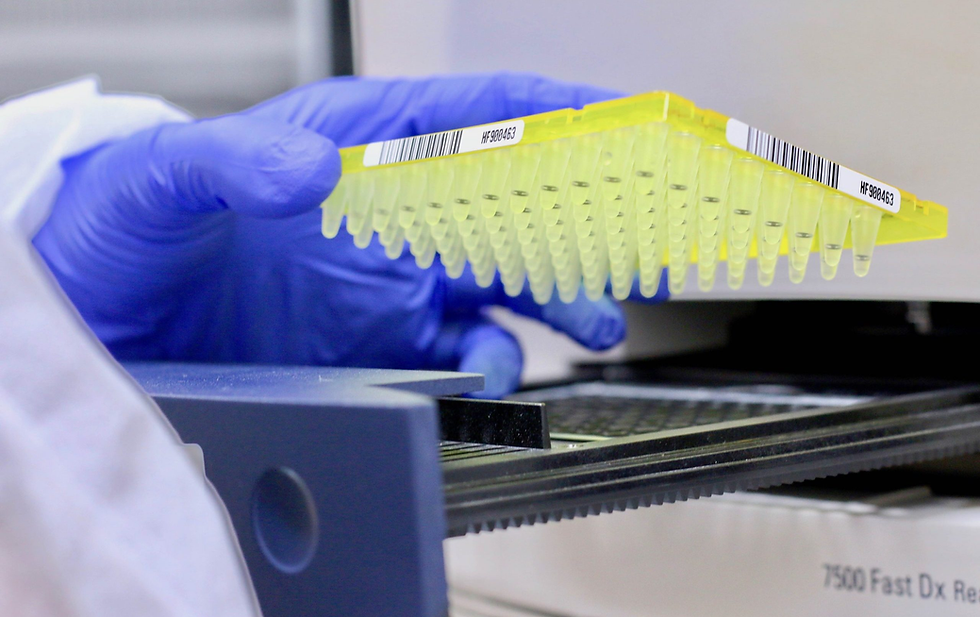
InSignia® has the ability to change everything by measuring RNA:DNA ratios to determine viability.
Are you interested in exploring viability applications for research?
Want to go one step further? - Partner with us to generate clinical evidence using InSignia® technology and gain an edge in the market.
-
Differentiate active infection from treatment-resistant organisms
-
Verify test of cure with confidence
-
Improve clinical trial endpoints
-
Reduce unnecessary antibiotic treatment
Statistics
2-in-1
EFFICIENCY
Combining NAAT sensitivity and culture output in a single one-well molecular test
2 HOURS
Speed
Time-to-result for viability determination vs. days or weeks for culture methods
+/- $0
Cost Neutral
No additional cost per test comparative to commercially available NAAT
Whether you want to conduct infectious disease research, understand complex patient cases, monitor clinical trial outcomes, or plan to deploy viability testing or AST in routine diagnostics, partner with us on an InSignia® project that’ll make a difference!
Contact the Technology team?
SpeeDx offers the technology, expertise, and partnership models to accelerate your diagnostic success.
Footnote:
*Further validation and regulatory approval would be required
References:
1. Lima, N.E., Strojny, K.L., Nguyen, L.H., Lowes, H., Gibbs, C., Prasad, V., Lonergan, T., Huston, W. and Todd, A. (2024). InSignia®: A molecular viability test for Chlamydia trachomatis and Neisseria gonorrhoeae. In SEXUALLY TRANSMITTED DISEASES (Vol. 51, No. 1, pp. S40-S41).
2. Lima, N., Gibbs, C., Huston, W. & Todd, A. (2019). P070 Determination of antibiotic susceptibility and efficacy by VITA-PCR. Sexually Transmitted Infections, 95(Suppl 1), A106.1-A106.
3. Pelaia, T.M., Kim, K., Lima, N., Gibbs, C., Smith, L.M., Teoh, S., Wang, Y., Denver, C., Mokany, E., Todd, A., Orde, S., Tang, B., McLean, A. & Shojaei, M. (2025). Evaluating the InSignia® IFI27 expression assay for detecting viral respiratory infection compared to a traditional gene normalisation assay. Sci Rep 15, 21481. https://doi.org/10.1038/s41598-025-04688-9
4. Wong, A., Lima, N., Applegate, T. L., Guy, R., Huston, W.M., Hocking, J.S. & Boettiger, D. (2024). Viability of Chlamydia trachomatis in Different Anatomical Sites—a Systematic Review and Meta-analysis, Clinical Infectious Diseases, 2024;, ciae401, https://doi.org/10.1093/cid/ciae401
5. Lima, N. et. al., Manuscript in preparation.